



Mark Bertolini had worked in private health insurance for his whole adult life, and never considered any sort of integrative therapies. Then, two personal health crises showed him firsthand the importance of holistic healthcare and the failures of the current system. As CEO of Aetna — a role he left in late 2019 when he sold the company to CVS — he implemented sweeping changes that reflected his newfound viewpoint. Read on to learn about his own transformative health journey, how he changed the culture of Aetna, why he believes holistic insurance and preventative healthcare can help fix the U.S. healthcare system, and more.
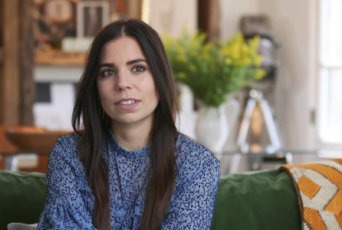
*This is a short clip of our interview with Mark Bertolini. Click here to watch the whole thing!*
You can also listen to our interview with Mark Bertolini on The WellBe Podcast.
The Two Health Crises that Shaped Mark Bertolini’s Outlook on Healthcare
Years before becoming CEO of Aetna, Bertolini faced two serious health challenges: one related to his son’s health, and the other related to his own. First, his son was diagnosed with a rare form of cancer at age 16, and Bertolini was told that his chances of survival were slim. Bertolini refused to accept that news, and quit his job at the insurance company Cigna to take care of his son full-time and advocate for experimental and aggressive approaches to treatment. His son ended up making a complete recovery.
One year later, Bertolini had a massive ski accident, breaking his neck and back and doing damage to his nerves. He was in a coma for a week, but after regaining consciousness, he got himself discharged as quickly as he possibly could. He left the hospital alive, but with a laundry list of narcotics and other prescription opioids to manage his pain.
These two events would change the course of anyone’s life, but Bertolini says that it was actually the repercussions in the years to come that had a bigger impact. Years after both he and his son had been “cured,” they both still lived with the fallout of their respective health crises and struggled to navigate life with their now chronic health issues. Bertolini’s son still dealt with immunology issues, while Bertolini himself suffered from persistent pain that prevented him from doing things he loved, like playing piano, riding his bike, and going fishing.
“Once you get out, you realize that what they fixed was the acute event, and they didn’t really prepare you to somehow gather what remained of your life together and move forward,” Bertolini says. Suddenly, he clearly saw how disconnected the system was: its extreme emphasis on acute conditions meant that countless people deemed “cured” by the healthcare system were, in all actuality, prevented from living full lives because of their health.
Discovering Answers in Integrative Medicine
Bertolini wanted to cut down all the barriers preventing him from living the life he wanted—and after realizing that “nobody’s around to help you figure it out but yourself,” he set out to achieve that. He dove into the research, just as he had when he’d been his son’s advocate, and ended up finding the answer somewhere that he would have never expected it: integrative medicine.
Before his own health challenges, he hadn’t thought very highly of holistic or integrative therapies. He remembers that, when he was sitting in his son’s hospital room all those years ago, a Reiki practitioner came in and performed Reiki on his son. After finishing, she turned to Bertolini and asked if he’d like to try, and Bertolini accepted. After a minute or two, he told her to stop — he found it irritating and pointless.
“I just put it on the back shelf and forgot about it,” he says. “Until I was trying to solve my own problems after my accident, when I was on seven different narcotic medications to control my pain and not feeling any better. It was either kill myself or find my way out. And it was in that journey of finding my way out that I discovered complementary medicine in a more meaningful way.”
Bertolini ended up trying craniosacral therapy. “Someone’s going to hold onto my head and my sacrum and I’m going to feel better? Ok, wacky, but maybe I’ll try it,” he says. “After the 4th visit I started coming off my meds, and a year later I was off all seven of my narcotic painkiller meds as a result.” He still uses a variety of different integrative practices to manage his pain and neuropathy, including craniosacral therapy, yoga, and meditation.
Promoting Holistic Healthcare as CEO of Aetna
While Bertolini was immersing himself in integrative therapies to treat his health issues, he was also the CEO of Aetna, one of the largest health insurance providers in the United States. Perhaps needless to say, his experience with the former began to shape his decisions in the latter.
“I go to work one day and I start meeting with my team and I say, ‘We should all have our employees do meditation and yoga,’” Bertolini remembers. “Everybody sitting at the table said sure boss, that’s a great idea, good one. And I get into my office and almost immediately the Chief Medical Officer (CMO) follows me in and says, ‘Yeah, that’s crazy.’”
But, just as he had with his son’s cancer prognosis, Bertolini refused to accept this as fact. Undeterred, he asked the CMO what would need to be done to objectively prove the effectiveness of yoga and meditation in order to implement his plan. The CMO replied that they would need a double-blind study — and so that’s what they did.
In the study, they looked at populations on both coasts of the country, measuring their stress levels based on heart rate variability and cortisol levels. The participants then underwent a 12-week yoga and meditation program (designed by a trained yoga instructor) and then had their stress levels measured again. They found that the program led to a dramatic reduction in stress in the participants — but, more importantly to the company executives, this also meant a reduction in cost to Aetna. As it turned out, the people that were in the highest quintile of stress consumed $2,500 a year more in healthcare than the average employee population. “What it did was it reduced our healthcare costs by seven and a half percent the next year, because we got those people well again,” says Bertolini. This was his first empirical evidence that natural medicine could be a game-changer.
Why Preventative Healthcare & Holistic Insurance Are Key to Solving The American Healthcare Crisis
There’s no question about the fact that the American healthcare system is broken. Just consider these facts:
- We have the lowest health outcomes of 34 OECD (Organization for Economic Cooperation and Development) nations.
- Our life expectancy has been going down for the past few years after decades of rising.
- The American healthcare system is the most expensive system per capita in the world.
So what’s the solution? Bertolini, unsurprisingly, has strong thoughts on the matter.
First off, he believes that the current debate over whether or not to support Medicare for all completely misses the point. “We keep trying to perfume the pig here by financing the system differently. It’s not gonna work,” he says. The problem is that all the discussion is centered around how to refinance the current system, instead of considering whether that system works. Our current system, Bertolini says, works well for acute care but completely fails when it comes to chronic care — and in a country currently swept up in a chronic disease epidemic, this is a huge issue. Bertolini believes the solution is to shift to a preventative healthcare model, one where practitioners, insurance providers, and the public focus, first and foremost, on addressing the root causes of chronic health issues.
As an example of preventative healthcare, he points to Medicare Advantage, an insurance plan in which Medicare benefits are provided through a private insurance company. He explains that with Medicare Advantage, insurance companies invest in the social determinants of health, and have seen great results: health outcomes improve, costs go down, and satisfaction ratings rise.
“The average Medicare person spends 120 hours in the healthcare system every year. That’s less than 5% or 6% of their waking hours,” he says. “So for 94, 95% of our waking hours, we’re in the world, and the doctor never has a clear picture of what’s going on out there.” He explains that all of the things that happen outside of the doctor’s office — diet, exercise, stress, relationships — have a much bigger impact on health than those short visits to the doctor, and that focusing on these factors has significant benefits, both in terms of individual health and costs to the insurer.
The takeaway from Medicare Advantage is clear to Bertolini. The system needs to provide people with preventative healthcare rather than just treating acute problems. Providing support for food, transportation, heat, and socialization is the same investment as the cost of one ER visit, and likely much more effective in the long-term. “What we need to do is fix that stuff. If we don’t, it doesn’t matter if the federal government is paying for everything,” he says.
In order to achieve that goal, Bertolini says, healthcare needs to become outcome-oriented. That means putting the desired health goal first and the financing second, the reverse of our current system. “We need to say to people, when you’re worried about your health, come and talk to us and let’s have a conversation where people ask ‘What about my health is getting in the way of the life I want to lead?’” he says. “That will then steer you toward the type of people you should go see. And then, let’s put together a plan.” In this holistic insurance model, the financing gets worked out last rather than first, with people thinking about what they want and need to keep themselves well first, then shopping for the most effective plan based on that, not the other way around.
Watch our full interview with Mark Bertolini to learn why he believes state-based licensure is the biggest barrier to coverage of integrative healthcare practitioners, the role that remote or telemedicine plays in healthcare reform, little-known ways that people can use their HSA/FSA accounts to access integrative medicine and preventative healthcare, what we as consumers can do to advocate for a better system, what he sees as the biggest driver of health problems among Americans, how an epidemic of hopelessness contributes to American health and life expectancy decline, and much more.
You can also listen to our interview with Mark Bertolini on The WellBe Podcast.
Citations:
The information contained in this article comes from our interview with Mark Bertolini, the former CEO of Aetna. Bertolini received a B.A. from Wayne State University and an M.B.A. from Cornell. He worked at Cigna, NYLCare Health Plans, and SelectCare before joining Aetna and serving as its CEO from 2010-2018. He is author of the book Mission-Driven Leadership: My Journey As a Radical Capitalist
The recovery story above is anecdotal and specific to this particular individual. Please note that this is not medical advice, and that not all treatments and approaches mentioned will work for everyone.

COMMENTS